Spencer Lee's Bar Arm and Tilt System
Understand Spencer Lee's bar arm and tilt system, what his Ocean course covers, and how folkstyle top wrestling differs from freestyle par terre.
By Eric Lundgren · · 5 min read
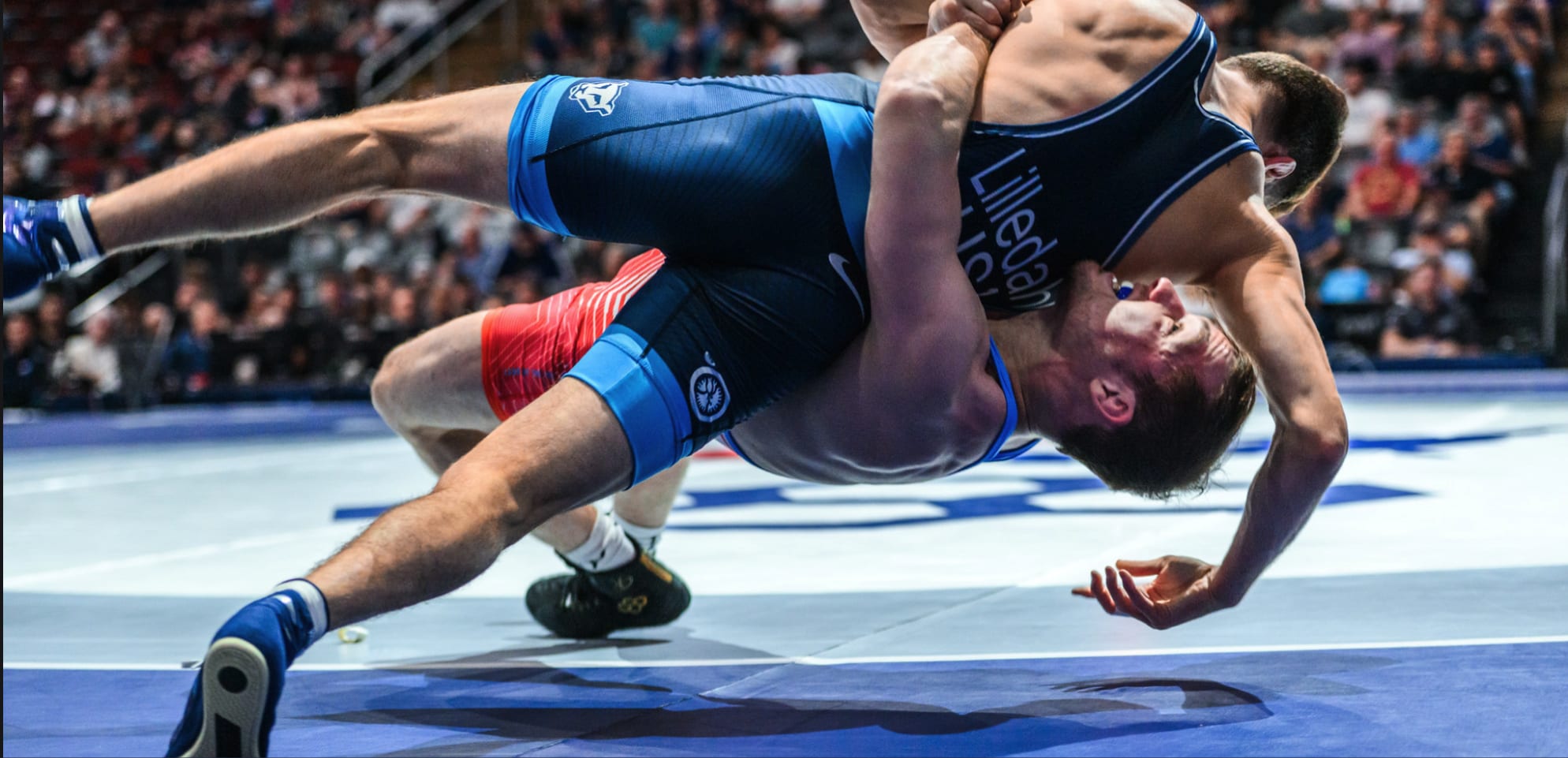
Spencer Lee's top wrestling gives coaches a useful place to study the connection between control and scoring. A breakdown earns access to an arm; the next decision is how to maintain control, create a turn, or move to another attack.
His Ocean instructional, Unstoppable Bar Arm Series, covers more than one finish. Its published description includes breakdowns, bar arm tilts, cross wrist tilts, claw tilts, and drills.
Here is a framework for understanding that top game, with a separate look at what changes in freestyle par terre.
TL;DR
- A bar arm is a top-position control that can lead to turns and pins.
- Position, pressure, and the opponent's reaction matter more than forcing one finish.
- Lee's Ocean course covers breakdowns and several tilt variations, plus drills and transitions.
- Folkstyle riding and freestyle par terre have different objectives and scoring rules.
- Develop a reliable attack, then learn how to continue when the opponent defends it.
Why top wrestling deserves focused practice
Neutral offense gets you to top position. Controlling and turning an opponent is a separate skill that needs its own practice time.
A useful top block has three parts: a breakdown, an attack once the opponent's base is compromised, and a response when that attack is defended. Lee's course description includes all three themes through breakdowns, tilts, and transitions.
The aim is not to guess how much time elite programs spend in each position. It is to give your own athletes enough structured repetitions to improve the decisions they actually face.
The bar arm: not a move, a position
A bar arm controls an opponent's bent arm from top position. The grip and body position vary with the particular turn or tilt.
From that control, a wrestler can work toward a turn or connect to another top attack. The right mechanics depend on the specific variation and the opponent's position.
- Break the base before trying to turn an opponent who can still support their weight.
- Keep your own balance as you adjust pressure and angle.
- Connect attacks when the opponent clears a grip or changes position.
No hold removes every defensive option. Practice under a coach's supervision and release pressure when your partner signals discomfort.
Getting to the bar arm reliably
A useful top attack starts with reaching control against resistance. Practice that entry alongside the turn.
A general drilling progression is to establish top position, practice a controlled breakdown, and work toward arm control against gradually increasing resistance.
Lee's published course description identifies breakdowns, bar arm tilts, cross wrist tilts, and claw tilts. Those confirmed topics are a better guide to the course than an assumed list of entries.
The mechanics that help maintain control
Pay attention to where your body weight goes, how your hips support the position, and whether your grip remains secure while the opponent moves.
The useful question is whether you can control a reaction without losing your own base. More force does not fix a poor angle, and a grip should never be treated as permission to crank a partner's shoulder.
Use the instructor's demonstration and coaching feedback for the details of a particular bar arm or tilt.
What changes in freestyle par terre
Folkstyle rewards control through riding time in applicable competitions and through near-fall opportunities. Freestyle puts different emphasis on exposure and the continuation of scoring actions.
A bar arm can be part of a freestyle attack, but control alone does not score. Under the current UWW rules, a hold that turns the opponent's back to an angle of less than 90 degrees to the mat is worth two points.
Ocean's Unstoppable Bar Arm Series is described as top-position instruction. Pair it with freestyle-specific coaching rather than treating it as a complete par terre curriculum.
What wrestlers can take from this
Develop a top attack that fits your wrestling and connect it to a response when the opponent defends. Focused practice can build confidence in the position without assuming one combination solves every opponent.
Track whether you can establish control, create a turn, and continue without losing your own balance.
Where to learn the full system
Spencer Lee's Unstoppable Bar Arm Series on Athletes Ocean covers breakdowns, bar arm tilts, cross wrist tilts, claw tilts, and drills for connecting top attacks.
It is relevant for athletes and coaches looking to add structure to top-position practice. The catalog describes it as suitable for a range of skill levels.
Frequently asked questions
Who is Spencer Lee?
Spencer Lee is a three-time NCAA champion at Iowa and the 2024 Olympic silver medalist at 57 kg. He beat Luke Lilledahl in two matches at Final X in June 2026 to earn another U.S. Senior World Team place. USA Wrestling's results
What is a bar arm in wrestling?
A bar arm controls an opponent's bent arm from top position, helping create leverage for a turn. The specific grip and body position vary by technique.
Is the bar arm the same as a half-nelson?
No. A half-nelson places an arm under the opponent's arm and behind their head. A bar arm controls the opponent's bent arm. They can connect within a top system, but they are different holds.
Can I learn the bar arm without elite athleticism?
You can learn bar arm mechanics without matching Lee's athletic ability. Start with controlled drilling and coaching feedback, then add resistance as you improve.
Does Spencer Lee teach this from the Iowa system or his freestyle approach?
The published description focuses on top-position wrestling, breakdowns, and tilts. It does not identify the course as a dedicated freestyle par terre program.
What's the most common mistake wrestlers make with the bar arm?
Trying to force the turn before establishing control. Check your breakdown, body position, and grip with a coach before adding pressure.
Related articles
- Keegan O'Toole's Cradle System: Entries, Control, and Finishes
- How to Build a Wrestling Practice: A Practical 90-Minute Template
- Best Wrestling Instructionals in 2026: Picks by Level and Goal
Eric Lundgren writes about wrestling, grappling, and the systems behind elite-level technique.
Explore the Athletes Ocean library to find instructionals for your training goals.